The anticipation for this weekend's Class 3-2-1A four-speaker debate regional is palpable for Wichita Collegiate coach Rob Egan.
And not just because his program is on a quest for a state championship three-peat in that format.
As thrilling as that pursuit is, Egan's excitement level is heightened simply from the fact that the 2021-22 season is, for the most part, back to normal. After navigating a challenging 2020-21 season that saw debate -- as well as many other fine art activities -- relegated to the virtual world, competition has returned to in-person settings this season.
And coaches and debaters across the state couldn't be happier.
"One of the things that was so difficult last year was not being able to really find a way to celebrate, whether it was the small stuff or big stuff," said Egan, who saw his four-speaker team go 10-0 at regionals and then 14-0 at state to become Class 3-2-1A state champions. "There were no send-offs, no parades, no anything in advance of regionals or state.
"We were fortunate enough to have success at regionals and state last year, but it almost didn't feel real for our kids because there was no awards ceremony. There wasn't anybody else in the building. When we won regionals last year, it was the start of winter break and we were the only people in the building. We won and it was cool, but then it was like, 'Now what?' We just went home without a celebration of any kind, and it just didn't feel the same."
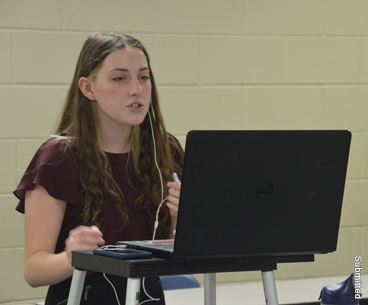 Debate had its challenges last season in a virtual-only format.
Indeed, there was plenty missing during last season's virtual campaign. In addition to the celebrations following big tournament wins, coaches across the state said that the absence of the mere camaraderie of the activity left a big hole.
"We always conduct an exit survey about what the kids enjoyed the most during the season," Washburn Rural coach Tim Ellis said. "A lot of them said their favorite part of activity were things like traveling to tournaments, sharing stories, meeting other students -- the squad bonding activities. And those just didn't happen with online debate."
In terms of the competition itself, there was a huge adjustment in going from in-person debate to virtual sessions. Not just for the students, but coaches as well.
"It was relatively difficult to adjust to the activity being online for a while," Ellis said. "A lot of the coaches and assistant coaches throughout the state had to learn a new format of debate that required a different set of skills and teaching things a different way from all those years we've done it the way we have. Communicating with someone through a screen is much different than doing it in-person. Some of the things we talk about with our kids like eye contact and being able to read someone's facial expression or body language changes quite a bit when that communication is happening over the computer.
"With things like cross-examination where there's a short time frame for people to ask and answer certain questions, you'd be interrupting somebody and it was just extremely difficult online. It was hard to read the room and know if you're being too aggressive. It led to people trying to talk over each other and it was a little messy at times."
The new-look landscape had its hindrances as well in keeping students fully engaged in the activity. While Egan said his program's numbers stayed strong, Ellis and Sterling coach Betsy Dutton said they saw attrition in their programs, something that was more common than uncommon state-wide.
"I kept most people, but I lost two senior debaters who placed second at state last year because they hated online and refused to do it," Dutton said. "My retention for the freshman class last year, who knew nothing but online, was horrible. I kept one. We've seemed to bounce back a little this year and those who remained and those who are new have done well this year for the most part. Our kids are, after all, social creatures."
Ellis agreed.
"Students who are hooked on debate were able to still find a lot of the things that they liked about debate as part of their online debate experience," he said. "But retaining younger students was much, much more difficult. Anecdotally at our school, my senior class is my largest returning class of experienced debaters, which is relatively strange. We usually retain about 25% of kids for their second year of debate and then it gradually dwindles down from there. But my sophomore and junior classes that were affected by going online are much, much smaller than my senior class and that is a testament that it was harder to get students hooked to online debate."
Ellis' Rural four-person debate teams have won five straight Class 6A state championships. His program is one of the largest in the nation, top 10 nationally, and routinely has traveled to tournaments across the Midwest in search of top-notch competition.
Some of those tournaments have remained in the virtual format again this year and Ellis said that with his team returning to in-person events in state, those national, prestigious events lost their appeal.
"The very first tournament my top teams competed in each year is normally held in Dallas but instead was held online," he said. "Immediately after the tournament, they were like, 'Ehh, we'd rather be in-person.' My students would rather go across town to an in-person debate rather than compete in these more prestigious tournaments nationally online. They're willing to forego some more difficult competitive opportunities to just have that in-person experience."
Egan said he was able to find some positives from last year's virtual season. But the positives from being in-person are clearly much greater.
"One of the things we liked about virtual and we've kind of tried to continue was being able to compete against schools from parts of the state that we wouldn't have otherwise because it's a three or four-hour bus trip," he said. "We were able to expose ourselves to some different qualities of debate from around the state in doing that. But there's so much you get in-person that you can't get online. Not only reading competitors, but reading judges. Am I saying something and the judge is shaking their head or are they nodding or smiling? The feedback we're getting from judges, the interaction they're having with students from other schools. The way they're learning about how body language portrays for their speaking -- it's so much more powerful this year in a way that just can't be transmitted on a Zoom call.
"Last year, we did our whole state competition last year from one of our administrator's offices while classes were going on around us. Our principal was judging from a faculty lounge closet, I was administrating from another closet in our school. We were literally in closets. It was not a glamorous experience."
Class 6A will hold regionals at Derby, Olathe North and Shawnee Mission South with the top-three teams at each regional advancing to the state competition. Class 5A will hold regionals at Emporia and Kansas City Sumner Academy, Class 4A at Fort Scott and McPherson and Class 3-2-1A at Nickerson and Wichita Collegiate with the top-four teams at each of those regionals advancing to the state competition.
State competition for Class 6A and 5A four-speaker debate will be held Jan. 14-15 at Wichita Southeast while the 4A and 3-2-1A state competitions will be held at Silver Lake on the same dates.
Two-speaker debate state competitions will be held at the same locations on the same dates for the respective classes. Two-speaker debate teams qualify for state throughout the regular season instead of through regional competition.
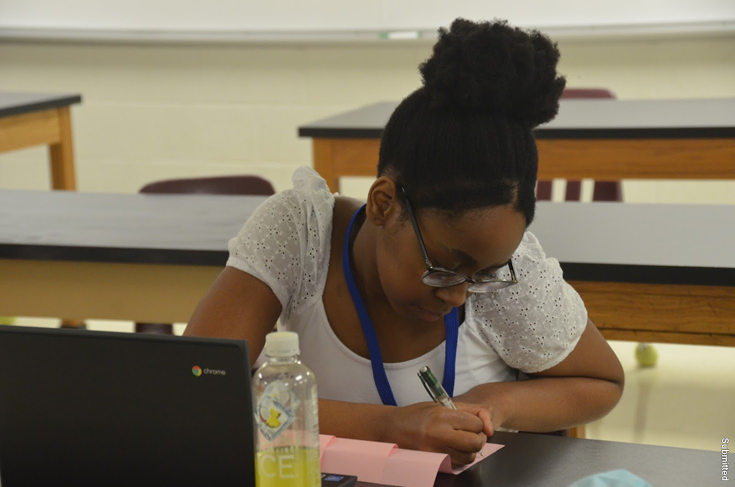 After going through a virtual debate season in 2020-21, schools are excited with the return to in-person competitions this season.